By Russell Bailey, February 2024
Introduction
Light is an essential factor for plant growth and development. Horticulture is the science and art of cultivating plants and lighting plays a crucial role in providing the necessary energy for photosynthesis and influencing various physiological processes. With the advancements in technology, artificial lighting has become an indispensable tool in horticultural practices, allowing growers to optimise plant growth, improve crop yields, and extend the growing season.
One of the primary purposes of lighting in horticulture is to supplement or replace natural sunlight. This is particularly important in regions with limited daylight hours or unfavourable weather conditions. By using artificial lighting systems, growers can control the duration, intensity, and spectrum of light to meet the specific needs of plants throughout their growth stages.
The important question then is, how do you know what lighting is needed and how do you validate that lighting either as a plant grower or as a lighting product manufacturer?
Crops and Light
The spectrum of light significantly influences plant growth and development. Natural sunlight consists of a broad spectrum of wavelengths, including ultraviolet (UV), visible, and infrared (IR) light. Artificial lighting systems can be designed to provide specific spectral compositions by utilising different light sources, such as light-emitting diodes (LEDs). By manipulating the spectral output, growers can tailor the lighting conditions to optimise plant responses. For instance, blue light promotes vegetative growth and compactness, while red light stimulates flowering and fruiting. Other wavelengths, such as UV or far-red light, can also elicit specific physiological responses in plants. Chlorophyll, the green pigment in plants (as well as algae and some bacteria), absorbs light of different wavelengths and this provides energy for the photosynthesis reaction. There are several chlorophyll chemicals that have different functions and absorb light efficiently in differing wavelength ranges. The concentrations of different chlorophyll change during the growth process. As such, adjusting the concentrations of different wavelengths can assist in growth.
The Important Lighting Metrics: PAR, PPF & PPFD

There are a range of horticultural lighting metrics that need to be understood. The first of these is Photosynthetic Active Radiation (PAR). PAR describes the total amount of light available to plants for photosynthesis in the 400nm – 700nm region and is reported as the total irradiance received, integrated between 400 and 700nm. The unit of PAR is Watts per square meter (W/m2).
The next metric is called the Photosynthetic Photon Flux (PPF). This is a measurement of the total light output in units of µmol/s and is analogous to the luminous flux (in lumens) when describing the total amount of visible light from a light source. To measure PPF, you need to measure the total output from the light source using a goniophotometer or an integrating sphere spectroradiometer.
PPF describes the total light emitted from a light source, but to define the light reaching the surface of a plant, we refer to
Photosynthetic Photon Flux Density (PPFD). This defines the PAR photons incident on the plants surface in units of µmol/m2/s so is arguably the most important metric for plant growers. This is analogous to the illuminance (lux) from visible light which is the flux incident on a surface per unit area. You measure PPFD using either a goniophotometer which measures the complete spatial light distribution or use a spectroradiometer or a PPFD photosensor.
Equipment for Lighting Product Manufacturers
Manufacturers of horticultural luminaires need to verify LED chip maker specifications, confirm the completed luminaires are working as expected as well as provide specifications for their customers. When putting together lighting schemes for customers the spatial light distribution is very important.
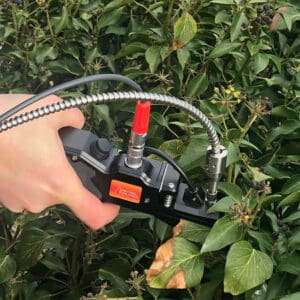
The minimum a manufacturer would need would be a PAR meter or spectroradiometer such as Pro-Lite’s Spektri 80.PAR or the Spectraval 1511.
Ideally a manufacturer would be able to measure the PPF and the light distribution. You can do this with just a goniophotometer but these measurements can take some time so an integrating sphere spectroradiometer is also recommended. This allows for high-speed measurement of finished luminaires.
Equipment for Growers
For plant growers the most important questions are whether there is enough light at the plant surface and if so, does it have the correct spectrum for their crop. Typically, the manufacturer of the lighting scheme will provide models for the grow light’s PPFD distribution. This can be done by certifying the values will be over a certain threshold number or by providing a photometric data file formatted for PPFD.
A PAR meter or spectroradiometer such as the Spektri 80.PAR or the Spectraval 1511 allow you to measure the spectrum and the PPFD at a point under the installed lighting. This allows you to verify the lighting is set up correctly and adjust as the lighting degrades with use. The mean time to failure with LED horticultural lighting is in the 20,000 – 30,000 hour range but don’t assume that the individual red and blue LEDs degrade at the same rate!

SSL Resource SPECTRI 80 Spectroradiometer for measuring PPFD, Chlorophyll, Beta-carotene, Phytochrome red / far red and more.
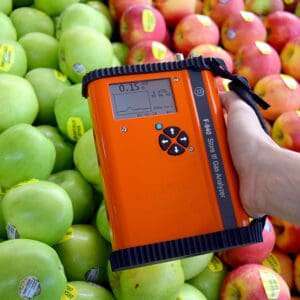
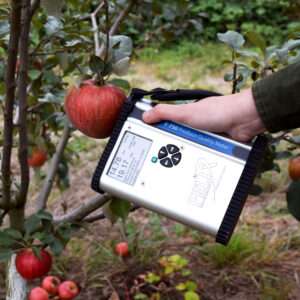
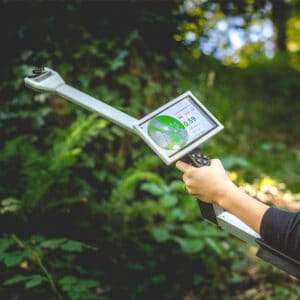
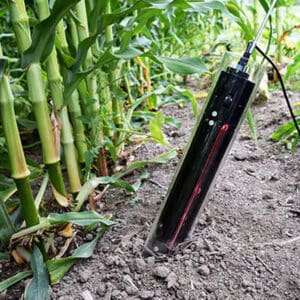
Pro-Lite supplies instruments used in plant science, food analysis and horticulture. The range includes plant science tools, gas analysers, spectral imagers and filed portable spectroradiometers. The plant science tools are used to research photosynthesis, canopy structure, leaf area, spectroscopy, and root function.