
Revealing the Invisible: Unleashing the Power of Spectral Imaging in Microscopy

Most microscopic spectral imaging is implemented using a multispectral approach. However, imaging can be extended to hyperspectral imaging.
Revolutionising Spectral Imaging
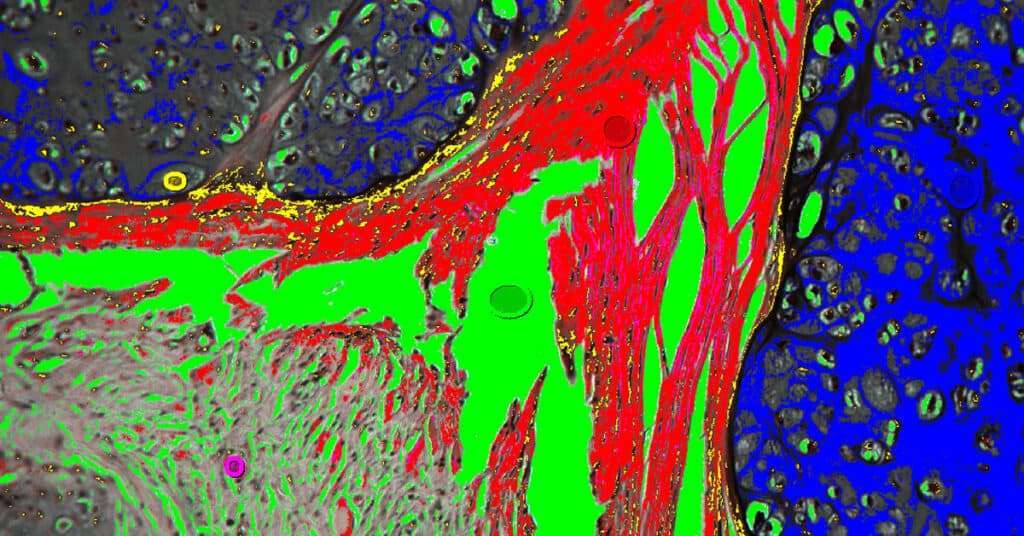
A new spectral imaging technology from Hinalea Imaging exploits a Fabry-Perot interferometer (FPI) to provide selectable high resolution hyperspectral images as well as near real-time multispectral images.
Spectral Imaging – is it the Future of Spectroscopy?

Optical spectroscopy provides an invaluable insight into the interaction between light and matter and is used in a remarkable range of applications. Traditionally, spectrometers have been used for…
The role of Raman Spectroscopy in Art Conservation

The use of Raman spectroscopy applied to cultural heritage has been well established since the 1980s, however, the market still does not provide the perfect solution for this sort of application.
Hyperspectral Imaging – a Technology Update

New developments in sensor technology and computer processing are rapidly enhancing consumer digital camera performance, leading to a wider adoption of imaging in everyday use.
Technical Briefing: Spectral Imaging Technologies

A review of the technologies that drive Pro-Lite’s spectral imagers By Dr Nick Barnett, May 2020 Introduction A spectral imager is a hybrid camera that is one-part camera and one-part spectrometer. As with a digital camera, you obtain a 2D image, but the spectrometer channel adds a third dimension. The “image” that you record with […]
Integrating Spheres: Their Application in Reflectance Spectroscopy

Reflectance spectroscopy is a versatile analytical technique which can reveal a material’s chemical composition, as well as allowing colour to be quantified in a multitude of applications in biology, pharmaceuticals, art and cultural heritage, consumer products and many more. Reflectance measurements can be made in a variety of ways, but the preferred approach is to […]
A New Era in Raman Spectroscopy

It has been over 90 years since C.V. Raman received the Nobel Prize in Physics for the discovery which bears his name. Since that time, successive improvements in measurement systems have enabled Raman spectroscopy to become a powerful and versatile analytical tool that is applied in a vast array of applications from material science to medical diagnostics.